NYSE Launches Extended Trading Hours for Options on 29 Stocks and ETFs
NYSE American Options has launched extended trading hours on 29 stocks and ETFs. Two new sessions run from 7:30 to 9:25 AM ET and from 4:00 to 4:15 PM ET. Day-one volume was thin, with Tesla the most active name at just over 3,000 contracts. Cboe has announced a similar program, so the two exchanges are now competing for options order flow.

Key Highlights
- NYSE American Options began extended trading hours on October 19, 2026.
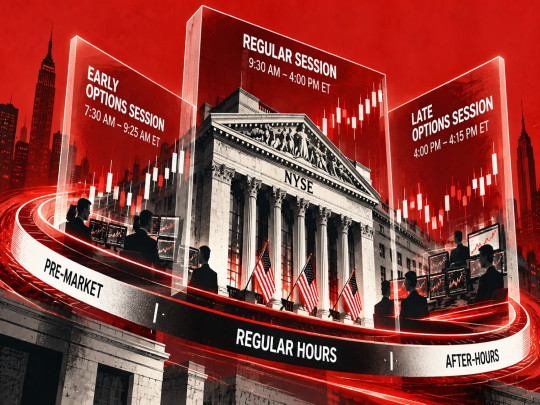
- Two new sessions run from 7:30 AM to 9:25 AM ET and from 4:00 PM to 4:15 PM ET.
- The launch covers 29 stocks and exchange-traded funds, mostly large and widely followed names.
- Day-one liquidity was thin, with the most active name seeing just over 3,000 contracts.
- Cboe has announced a similar programme, pointing to rising competition for options order flow.
The New York Stock Exchange, founded in 1792 and part of Intercontinental Exchange (NYSE: ICE) since 2013, has opened its options market for longer. From Monday, October 19, 2026, selected options on NYSE American Options can trade before the regular session begins and for a short period after it ends. The change covers 29 securities and follows an announcement by rival exchange operator Cboe Global Markets (Cboe: CBOE) of a comparable programme.
The first day was quiet. The launch still matters, because it changes when investors can manage risk in options and adds a new front in the contest between exchanges. This article explains what has changed, how the new sessions work and which risks remain.
What Extended Hours Options Trading Means
An option is a contract that gives its holder the right, but not the obligation, to buy or sell a share or fund at a set price before a set date. Investors use options to protect existing holdings, to express a view on price direction and to adjust risk without trading the underlying asset directly.
Until now, listed equity options in the United States have mostly followed the regular stock market day, from 9:30 AM to 4:00 PM ET. Shares themselves can already trade in electronic sessions before the open and after the close. That gap matters. When a company reports results or a government agency publishes economic data outside regular hours, the share price can react straight away, while most related options contracts must wait for the next regular session. Extended hours options trading narrows that gap by opening additional windows for selected contracts.
The New Schedule at a Glance
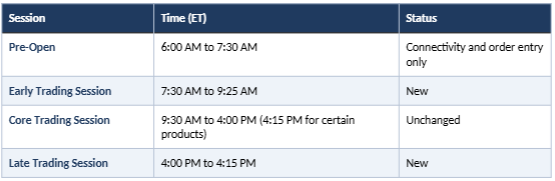
There is a five-minute pause between the end of the early session and the core open. On shortened trading days, the core session ends at 1:00 PM ET and the late session runs from 1:00 PM to 1:15 PM ET. No sessions run on market holidays.
The rollout was staged. Certification testing opened on August 18, test symbols went live in production on September 21, and the full list of eligible securities began trading on October 19.
Which Securities Are Eligible
The initial list has 29 symbols: five exchange-traded funds and 24 single-stock symbols. Alphabet appears twice because both of its share classes are included, so the single-stock group covers 23 companies. The five funds are the SPDR S&P 500 ETF Trust (SPY), the Invesco QQQ Trust (QQQ), the iShares Russell 2000 ETF (IWM), SPDR Gold Shares (GLD) and the Financial Select Sector SPDR Fund (XLF).
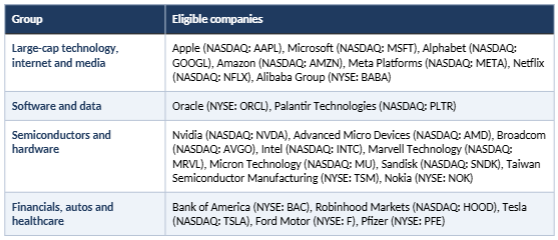
The five funds already trade until 4:15 PM under an existing exchange rule, so for them that quarter hour stays in the core session. The new late session therefore mainly adds time for single stocks, while the early session is new for every eligible symbol.
How the New Sessions Work
NYSE American Options pairs electronic trading with a physical trading floor, and the design of the new sessions is cautious, borrowing heavily from the regular session.
- Order types. Only limit orders and market maker quotes are supported. Limit orders can be day or immediate-or-cancel, routable or non-routable, and intermarket sweep versions are allowed. Market orders held for the day, stop orders, good-till-cancelled orders, complex multi-leg orders, orders designed for the opening auction and cross orders are not available.
- Opening process. Each option class opens once a two-sided quote or a trade in the underlying shares appears from any US national exchange after 7:30 AM ET. This ties the options market to activity in the stock market. The exchange does not publish auction imbalance information for early-session openings or for late-session reopenings.
- Safeguards. Best-price protection and order routing across exchanges continue to apply, and limit order protections match the core session. Two checks that guard against options trading out of line with the underlying share, known as the arbitrage and intrinsic value checks, work differently. They are not applied in the late session, in line with the 4:00 PM cutoff. In the early session they use the last sale from any equity exchange as the reference price, because the primary market has not yet opened.
- Market makers and specialists. Market makers keep their option class assignments in the new sessions, but taking part is voluntary. A market maker who chooses to quote an assigned class must meet the continuous quoting obligation. Specialists can opt out of either extended session, and NYSE may then appoint a different specialist for it.
- Participation requirements. Firms need a letter of guarantee from a clearing member authorised by the Options Clearing Corporation and must give customers suitable risk disclosures before accepting orders.
- Trading floor. There is no open outcry in the early session. The floor operates until 4:15 PM for designated issues, and eligible equity options and FLEX options can trade by open outcry through the late session.
Why Exchanges Are Extending Options Hours
Three forces help explain the move.
Information does not follow the regular session clock. Many major United States economic releases, including employment and inflation data, are published at 8:30 AM ET, which now falls inside the early session. Many companies also report earnings before the open or soon after the close. The new sessions bring more of those moments into the hours when options can trade, although the late session's 15 minutes capture only the first stretch of the reaction after the bell.
Hedging needs have changed. Investors who use options to protect share positions may want to adjust that cover when shares move outside regular hours. Extended sessions give them a venue to do so, subject to the liquidity available.
Demand for longer access is growing. Crypto markets established continuous trading, and prediction markets and perpetual futures have since added to demand for round-the-clock exposure. Cboe data show that extended-hours trading recently reached record levels, averaging more than 199,000 contracts a day. Exchanges have a commercial incentive to capture that activity before rivals do. Kevin Tyrrell, NYSE's chief product officer, framed the launch in similar terms, saying it reflects demand for investment opportunities and risk management over a longer period.
What Happened on the First Day
Activity in the first extended session was light. According to SpotGamma data, the most active name was Tesla, with a little over 3,000 contracts traded, almost all of them calls, and a combined value below 100,000 US dollars. Tesla is due to report earnings on Wednesday, and the pattern is consistent with traders rolling existing positions ahead of that event rather than opening large new ones.
One thin session says little about the longer-term outcome. New trading hours often take time to attract depth, because market makers decide whether to quote only after weighing costs against demand. Since participation is voluntary, the quality of early-session markets will depend on how many firms quote and how tightly.
NYSE and Cboe Compete for Extended Options Flow
Cboe has announced extended trading for 25 single stocks and five exchange-traded funds, so the two venues offer overlapping but not identical lists. Options are multi-listed, which means the same contract can trade on several exchanges. Longer hours therefore become another area of competition for market maker attention and order flow.
If liquidity spreads across several venues during quiet hours, the bid-ask spread, which is the gap between the price buyers will pay and the price sellers ask, could stay wider for longer than it would in a single deep market. Best-price protection helps route orders to the best displayed quote, but it cannot create quotes that nobody posts.
Risks and Limitations
Extended trading is not risk free, and early conditions may differ from the regular day.
- Thin liquidity. Sparse quoting can lead to wide spreads and larger price moves on modest orders.
- Weaker price references. With the primary equity market closed, early-session reference prices rely on the last sale from any exchange, which may be a less dependable guide than a primary-market print.
- Limited order flexibility. Strategies that depend on stop, good-till-cancelled or complex orders cannot be fully replicated outside core hours.
- Operational demands. Firms must extend monitoring, risk systems and customer disclosures, and clearing arrangements must cover a longer day.
There are potential benefits on the other side. Institutional investors with global or event-driven exposures may value the chance to adjust positions closer to the time news arrives. Whether that value outweighs the execution costs of thin markets is an empirical question that the first sessions cannot yet answer.
What to Watch Next
- Contract volumes in each extended session compared with the core day.
- Quoted spreads in extended sessions compared with core-hours levels.
- The split of activity between single-stock options and fund options.
- The number of market makers choosing to quote each class.
- Whether event-driven demand appears around Tesla's earnings this week.
- The December equities extension. Media reports point to a December 6, 2026 start with trading of about 23 hours a day, five days a week, in the same names. NYSE's own release says only that equities will follow in December, and its published equities FAQ describes the extended schedule as subject to regulatory approval, so the final timetable is worth confirming with the exchange.
Extended options hours are likely to develop as a gradual experiment rather than an abrupt shift. The outcome will depend on liquidity provision, regulatory comfort and real user demand, not on the exchange timetable alone.
Related post