Why Did Constellation Energy (Nasdaq:CEG) Stock Jump 12% on the Alphabet Power Deal?
Data centres are thirsty, and nuclear plants have the water-cooled answer. Constellation Energy (Nasdaq:CEG) leapt 12% on a long power deal with Alphabet, and Vistra and NRG hitched a ride.

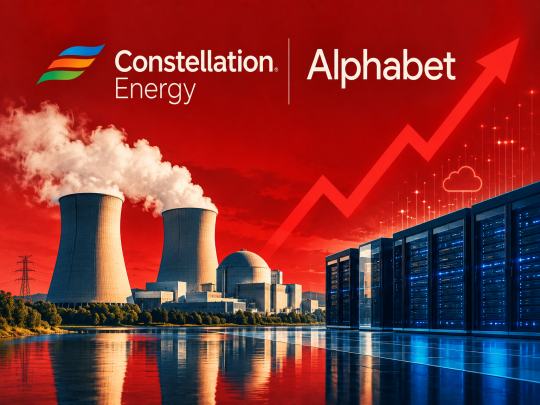
Constellation Energy Corp. (Nasdaq:CEG) closed up about 12%, near $300, after announcing a long-term power agreement with Alphabet. The deal covers 3.6 gigawatts overall, including 890 megawatts of nuclear power over 20 years. Utilities were the best-performing sector in the S&P 500, up about 3%, and shares of other independent power producers rose in sympathy.
The details of the agreement
Reports described the deal as a broad supply arrangement totalling 3.6 gigawatts, of which 890 megawatts will come from nuclear generation under a 20-year commitment. A 20-year horizon is unusually long for the power market and gives Constellation visibility on revenue from its nuclear fleet over a period that extends well beyond most corporate planning cycles. For Alphabet, the agreement secures a stable supply of carbon-free electricity as its data-center operations expand.
A contract of this length changes the way investors may value the underlying plants. Instead of selling output at prices that move with wholesale markets, Constellation can lock in a portion of its generation at agreed terms, reducing earnings volatility and supporting the case for continued investment in the fleet.
Peers rally in sympathy
Vistra rose about 11% and NRG about 7% as traders reassessed the value of generation capacity located near data-center demand. One report also cited speculation about a possible federal loan to support upgrades at Vistra plants. That was not a company announcement, and investors should treat it as unconfirmed market talk, not as a development.
The sector-wide move suggests that investors saw the Alphabet agreement as a signal for the group, not only for Constellation. If large technology companies are willing to sign decades-long contracts for firm power, other producers with similar assets could, in theory, secure comparable deals.
The scarcity argument
The central message from the session is that contracted nuclear power for data centers is being priced as a scarce asset. Data-center operators need electricity that is available around the clock, and nuclear plants provide steady output with no direct carbon emissions. New nuclear capacity takes years to build, so existing plants with long-term contracts are increasingly seen as valuable and hard to replace.
That logic explains why a single agreement can move an entire sector. It also explains the magnitude of the gain in Constellation’s shares, which reflects both the contract itself and a re-rating of the company’s generation fleet.
After-hours action
The after-hours tape held the day’s gains, with the shares staying close to the $300 closing level. That indicates that buyers were not simply taking quick profits and that the market is comfortable, for now, with the new valuation.
Risks and what to watch
A 12% jump in a single session leaves the stock vulnerable to a pullback if details of the contract are less favourable than assumed. Investors will want to know the pricing structure, the timing of deliveries and any regulatory approvals needed. They will also watch whether similar agreements follow with other technology companies, and whether the federal loan talk around Vistra turns into something concrete. If more contracts are announced, the scarcity premium may widen; if not, the rally could fade as attention shifts back to power prices and interest rates.