Why Is Cenovus (TSX: CVE) Buying Athabasca Oil (TSX: ATH) for C$5.7 Billion?
Oil sands firms are growing by buying their neighbours. Cenovus is the latest to try, and the market has applauded the seller more than the buyer.

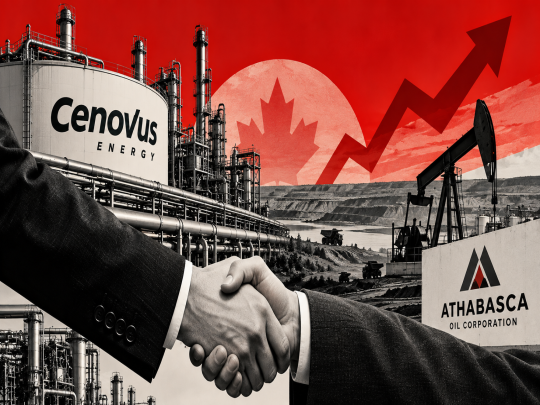
Cenovus Energy (TSX: CVE) announced earlier this month that it plans to acquire Athabasca Oil Corp. (TSX: ATH) in a cash-and-stock deal valued at about C$5.7 billion. The transaction continued to shape energy sector sentiment on the Toronto Stock Exchange this week. For investors asking why Cenovus is buying Athabasca Oil, and why the two stocks moved differently, the answer lies in oil sands consolidation, production growth and the price paid.
What Cenovus gets in the deal
The acquisition adds about 45,000 barrels of oil equivalent per day (boe/d) of production. That unit simply converts oil and natural gas into one common measure. The deal also brings growth potential, with a target of raising thermal oil output toward 115,000 barrels per day by 2032, along with full ownership of related assets.
Owning assets outright gives Cenovus more control over operations and spending, which can help lower costs and speed up development decisions.
Why consolidation is happening in the oil sands
Canada's oil sands industry is capital intensive. Producers benefit from scale because they can share infrastructure, spread fixed costs over more barrels and manage long-life projects more efficiently. Buying a neighbour is often cheaper than drilling new reserves from scratch.
Supportive policy signals for production growth and pipelines have also improved the mood in Canadian energy. When companies believe they will be able to get more oil to market, they are more willing to invest in growth through acquisitions.
Why the two share prices reacted differently
Athabasca shares surged because the offer carried a premium. A premium means the buyer is paying more than the recent market price, so the target's stock rises toward the deal value.
Cenovus shares, by contrast, saw some pressure on valuation concerns. This pattern is common. Investors in the buying company worry that it may be paying too much, taking on integration challenges or using too many new shares. Because part of the price is paid in stock, existing Cenovus shareholders may also see their ownership share diluted.
What investors should watch
Important next steps include shareholder and regulatory approvals, the final mix of cash and stock, and how quickly Cenovus can achieve cost savings. Oil prices matter too. Crude was mixed on Tuesday, yet energy stocks as a group still helped lift the S&P/TSX Composite Index.
For long-term investors, the central question is whether the extra production and growth runway can generate returns that justify C$5.7 billion. The answer will depend on oil prices, operating costs and execution over many years.
How mergers and acquisitions affect shareholders
Investors often ask what happens to my shares when a company is acquired and whether the buyer or the target is the better investment. As a general rule, shareholders of the target receive a premium, while shareholders of the buyer bear the risk of overpaying. In a cash-and-stock deal, target holders may also receive shares that rise or fall after closing. Read the merger agreement summary, note the closing conditions and expected cost savings, and compare the price paid per barrel of production with similar oil sands transactions. A deal that looks expensive today can still prove wise if commodity prices and efficiency gains cooperate.
This article is for information only and is not investment advice. Please consult company filings and official announcements for the deal terms.a