Ray Dalio Debt Crisis Warning 2026: Dump Bonds, Buy Gold and Bitcoin
Ray Dalio warns America's debt crisis could hit within three years, driven by a widening gap between what the government spends and what it collects. This piece breaks down his numbers, his "3% solution" for avoiding it, and why he's telling investors to underweight bonds in favour of gold and Bitcoin.

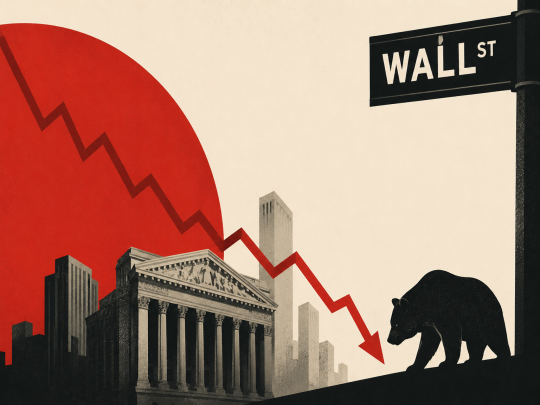
Ray Dalio has a habit of being early. Sometimes too early. His new warning, however, arrives with numbers precise enough to be uncomfortable. America takes in about $5.5 trillion a year in revenue and spends roughly $7.5 trillion, leaving a shortfall of $2 trillion that must be borrowed. Add in old debts coming due for repayment alongside interest owed, and the total bill for keeping up with existing debt runs to nearly $11 trillion, almost double what the government collects. His guess on when this becomes unmanageable: within three years, give or take two.
Mr Dalio built his career reading exactly this kind of imbalance, and in his new book, How Countries Go Broke: The Big Cycle, he lays out a template for how it typically unfolds. He describes government finances as a circulatory system. When borrowed money is used well, it generates enough income to cover its own repayment, which keeps the system healthy. When it is not, debt payments build up like plaque, slowly squeezing out everything else a government needs to spend on.
The warning signs, in his framework, are measurable rather than mysterious. Watch how much of government revenue goes toward debt service. Watch whether there are enough buyers willing to hold new government debt. And watch what a central bank does when buyers grow scarce. If it lets interest rates rise to attract them, borrowing costs climb and growth slows. If it prints money to buy the debt itself, the currency weakens and prices rise. Mr Dalio's point is that governments facing this choice eventually get squeezed into some mix of both.
This is not, in his telling, a uniquely American affliction. He points to Japan, whose debt now exceeds 215% of its GDP, as a preview of what a slow-motion version looks like. Japanese government bonds have lost 51% of their value against the US dollar since 2013, and 76% against gold over the same period, as the Bank of Japan printed money to keep buying debt that investors were reluctant to hold. Ordinary Japanese workers, he notes, have seen their wages fall 55% relative to American wages in that time, measured in a common currency. It is, in his analogy, what a slow bleed looks like when nobody notices it happening.
His advice for investors follows from this reasoning. Hold fewer government bonds. Put 10 to 15% of a portfolio into gold, which has no government able to print more of it. Add a smaller position in Bitcoin, which he now treats as playing a similar role. Both assets, in his view, benefit precisely because they answer to no monetary authority.
Yet Mr Dalio is not simply forecasting doom. He offers what he calls a "3% solution": bringing the deficit down to 3% of GDP through a balanced mix of modest spending cuts, modest tax increases, and modestly lower interest rates, so that no single lever has to move far enough to shock the economy. He points to America's own experience between 1991 and 1998, when the deficit was cut by five percentage points of GDP without derailing growth, as evidence that a soft landing is achievable if the adjustment starts while the economy is still strong.
The obvious rebuttal is that America has heard versions of this warning for two decades, and Treasuries have kept paying investors on time throughout. Mr Dalio's answer amounts to a doctor's answer: a smoker who has not yet had a heart attack has not disproven the diagnosis, only postponed the appointment. Whether that framing convinces sceptics or simply confirms what they already suspected about permabears is, in a sense, beside the point. The deficit trajectory has genuinely worsened, and interest costs are closing in on defence spending as a share of the federal budget. Even those unmoved by "crisis" language increasingly concede the trend itself is not comfortable.
What makes Mr Dalio's argument harder to wave away than most is that it does not depend on predicting a specific trigger, a market crash, a credit downgrade, a political showdown. It rests instead on a simple accounting identity: debts that grow faster than the income available to service them eventually collide with the willingness of others to keep lending. History, he argues, offers little comfort here. Every prior reserve currency, from the Dutch guilder to the British pound, eventually lost that status through some version of this same mechanism.
Whether three years turns out to be the right number matters less than the question underneath it: what happens to confidence in a currency once servicing its debt starts competing with everything else a government exists to do.
Reference: Ray Dalio, "How Countries Go Broke: The Dynamic Behind What is Happening Now," Principled Perspectives, August 21, 2026. Available at: https://raydalio.substack.com/p/how-countries-go-broke-the-dynamic
FAQs
Q: What is Ray Dalio's core warning about the US economy?
A: Dalio argues that America's government spends far more than it collects, and that the combined bill for interest and debt repayment now approaches $11 trillion a year, close to double annual revenue. He believes this imbalance could trigger a debt crisis within roughly three years if left unaddressed.
Q: What does Dalio recommend investors do?
A: He suggests holding fewer government bonds, allocating 10 to 15% of a portfolio to gold, and adding a smaller position in Bitcoin, on the reasoning that both sit outside any government's ability to print more of them.
Q: What is Dalio's "3% solution"?
A: It is his proposed fix for the deficit: bringing it down to 3% of GDP through a balanced combination of spending cuts, tax increases, and lower interest rates, so that no single change is severe enough to shock the economy.
Q: Why does Dalio use Japan as an example?
A: Japan has the highest debt-to-GDP ratio among major economies, at roughly 215%. Its central bank has printed money to keep buying government debt, and Japanese bonds have lost significant value against both the dollar and gold since 2013, which Dalio treats as an example of this dynamic already playing out.
Q: Is this Dalio's personal opinion or based on historical data?
A: He draws on a long historical pattern, citing roughly 35 recent cases of countries experiencing similar debt dynamics, and argues that every past reserve currency, including the British pound and Dutch guilder, eventually lost its status through a comparable process.