Fed Holds at 3.75-4%: What It Really Means for Your Wallet
The Federal Reserve has paused, but borrowers aren’t getting relief. From credit cards and mortgages to car and student loans, most of the pressure on American households is not the Fed’s to remove.

Key highlights
- Credit-card rates track the Fed within one or two billing cycles; mortgages follow Treasury yields.
- Hold brings no relief: thirty-year mortgage rates have exceeded 7% for more than a month.
- Oil above $100 and sticky diesel costs make this an energy shock rates cannot fix.
- Cheap holiday car loans exist, but mostly for top-tier borrowers; used-car rates still exceed 10%.
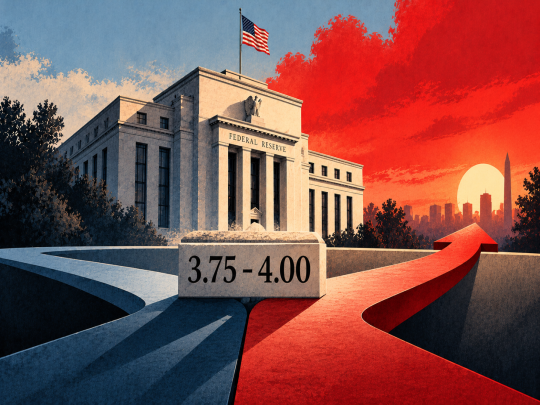
When the Federal Reserve announces a decision, it is tempting to picture a single dial being turned. In truth the interest rate that the Federal Open Market Committee sets on Wednesday, 3.75-4% for the overnight lending of banks to one another, is only the first of several. By the time it reaches a household it has been bent, delayed or overruled by other forces. That is why a hold, as the Fed delivered this week, brings so little comfort. The central bank has stopped pushing. The pressure on borrowers has not stopped.
Three kinds of rate
The pass-through from the Fed to the public comes in three varieties, and the differences matter.
The first is the fast lane. Credit cards, most of which carry variable rates, key off the prime rate, which sits roughly three percentage points above the Fed's benchmark. A change at the Fed typically reaches a cardholder within one or two billing cycles. So September's quarter-point increase is still working its way into statements. Card rates have risen for three consecutive months and stand at their highest since last December, partly because lenders are anxious about delinquencies as inflation lingers, and more increases look likely as the September move is fully absorbed.
The second is the market lane. Fixed-rate mortgages ignore the Fed's rate and follow long-term Treasury yields, which reflect what investors think about inflation and the economy for years ahead. Those yields have been rising, and the ten-year stood at about 5.03% after the decision. By one widely followed gauge, the thirty-year mortgage has been above 7% for more than a month. A separate weekly survey put it at 6.71% in early September, then the highest since July 2025; different methods give different readings, but the direction is the same. A policy hold does nothing to reverse that. As one lender put it, there is no single switch: the oil price, consumer spending and a run of benign inflation reports would all have to move together.
The third is the locked lane. Car loans and federal student loans carry fixed rates for life, so existing borrowers are shielded from the Fed's moves. New borrowers are not. The headline rate on a new-car loan has hovered around 7% all year. Federal student loans for new borrowers cost between 6.52% and 9.07%, reflecting the ten-year Treasury auction held in May. The Fed's decision changes none of this.
An energy shock in a monetary costume
Here lies the heart of the Fed's dilemma. The upward pressure on prices stems in large part from the war with Iran. Oil is above $100 a barrel, and diesel, the lifeblood of shipping and farming, is expensive. These are shocks to supply. Raising interest rates cannot add a single barrel to the market; it can only reduce the demand that competes for those barrels, and make it harder for firms to pass on higher costs.
Normally, central banks are told to look through supply shocks, on the reasoning that they raise prices once and fade. They look through them only if inflation expectations stay put. That condition is what troubles the hawks. The Fed has now missed its 2% target for five and a half years, and the worry is that households and firms have begun to plan for faster price rises, and that the pressure is spreading to goods and services with no connection to energy. Core inflation, which strips out food and fuel, is expected to have exceeded 3% in September. If so, the energy shock is no longer the whole story, and a monetary response is more defensible.
A tale of two spenders
The cost of the shock falls unevenly. Estimates suggest the war has already cost the typical American household about $2,000, much of it through energy, with higher borrowing costs on top. But the aggregate hides a sharp divide. Wealthier households have been enriched by the surge in artificial-intelligence shares and continue to spend freely. Lower- and middle-income households are dealing with falling real wages and expensive credit, and are cutting back. The overall figures, with growth tracking 3.4% annualised in the third quarter and unemployment low, look strong because the first group is carrying them.
That divide puts a further hike in an awkward light. Higher rates would take most of their bite from the second group, the ones least able to spend and most exposed to card and car-loan costs, while doing comparatively little to cool the spending of the first.
Small mercies, and politics
There are consolations. Savers can still find the best online accounts paying more than 4%, below the peaks of a few years ago but well above what the big banks offer. Lenders usually dangle cheaper car financing in the final quarter, though the best deals tend to be reserved for new-car buyers with the strongest credit, and the used-car market, where loans cost more than 10%, sees no such relief. Advisers urge borrowers to pay down costly debt first, haggle over loan terms and put savings where yields are highest.
Washington is also stirring. President Donald Trump has signed an executive order intended to trim some mortgage costs, and has said he "might" back a bipartisan bill, still in committee, to cap federal student-loan rates. Both reflect the political weight of affordability ahead of the midterm elections on November 3. The Fed's own timing, with its next decision in December, after the vote, has not gone unnoticed.
The decision itself
The committee's vote was 10-2, with Governor Lisa Cook and Cleveland Fed President Beth Hammack in favour of a quarter-point rise. The statement raised its description of activity from "solid" to "strong" and dropped the line defending September's hike, replacing it with a pledge that "the accumulation of more information" would shape its next step. It still promised to "deliver price stability". Futures markets put the chance of a December increase near 85%.
For households, the translation is straightforward. A hold means the Fed is not adding to the burden today. It does not mean it will not tomorrow, and it does nothing about the burdens already in place: expensive oil, dear mortgages, pricey credit. The Fed has stopped to see what the data say. Borrowers, meanwhile, are standing in the same queue they were in before.
.png)