ASX Pre-Market: Friday, 18 September 2026
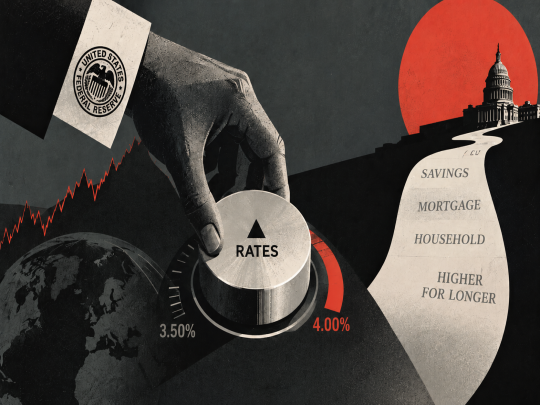
ASX 200 futures point to a firmer open after Wall Street rallied overnight as Treasury yields and oil prices retreated, easing the pressure that followed the Federal Reserve's rate hike, with RBA Governor Bullock's remarks and a Bank of Japan decision the next tests ahead of the RBA's own call.


Welcome to your morning briefing on overnight Wall Street action and what's set to move the ASX 200 at the open. (See yesterday's ASX Post-Market Wrap: 17 September 2026 for the full session recap.)
ASX Futures
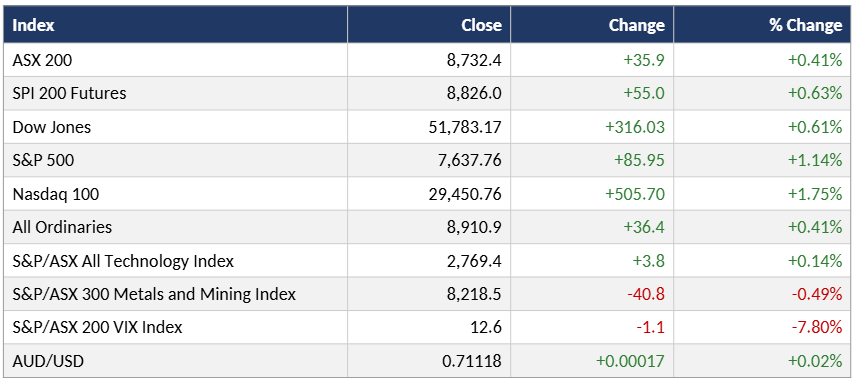
SPI 200 futures were up 55 points, or 0.63%, to 8,826, pointing to a firmer open after Thursday's local session rose for a second straight day. The stronger lead follows Thursday's close, where the ASX 200 added 35.9 points, or 0.41%, to 8,732.4, and comes as Wall Street rallied overnight as falling Treasury yields and a retreating oil price offered relief from the hawkish tone that had followed Wednesday's Federal Reserve rate hike.
Overnight Leads + This Morning
Thursday's local session rose for a second straight day, with the ASX 200 adding 35.9 points, or 0.41%, to 8,732.4, having traded as much as 1% higher earlier before paring gains. The advance looked stronger on the index than underneath it: advancers edged out decliners by a narrow 146 to 130 on the S&P/ASX 300, while only four of eleven sectors finished in the green. Financials did the heavy lifting in their best session in over a month, as the big four banks all rallied more than 1% and investors took comfort from Treasury yields easing rather than reacting badly to the Fed's rate decision itself. Citi's upgrade of National Australia Bank to Buy, with its price target lifted to $42.10 from $40, gave the sector an extra kick, while gold miners were among the session's weakest performers as bullion reversed from an overnight gain into an Asian-trade slide once Fed Chair Kevin Warsh's hawkish press conference sank in.
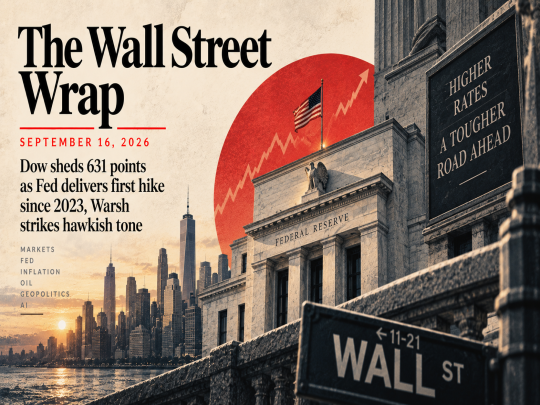
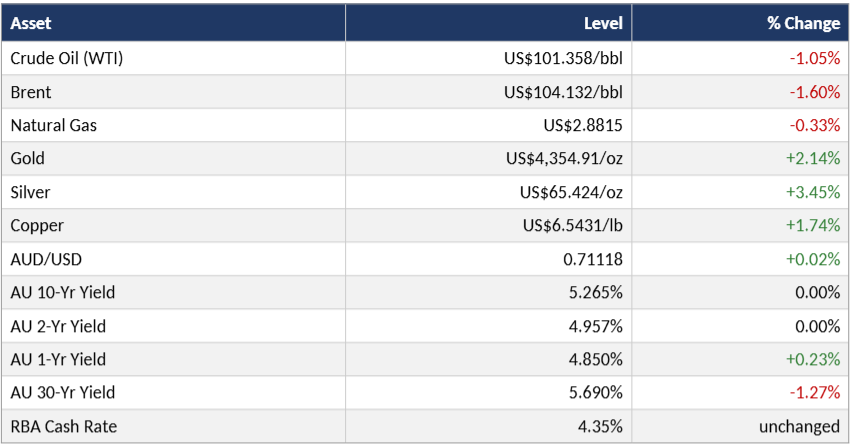
Overnight, Wall Street rallied as Treasury yields and oil prices both retreated, clawing back much of Wednesday's Fed-driven losses. The Dow Jones Industrial Average rose 316.03 points, or 0.61%, to 51,783.17, the S&P 500 gained 85.95 points, or 1.14%, to 7,637.76, while the Nasdaq 100 jumped 505.70 points, or 1.75%, to 29,450.76. The rally was broad, with technology leading the advance as Nvidia, Amazon and Microsoft all posted gains, and homebuilders including D.R. Horton and PulteGroup rising as easing yields offered relief to a sector that had been squeezed by the recent run-up in borrowing costs. The US ten-year Treasury yield fell more than seven basis points to around 4.93%, dropping back below the 5% level it had reclaimed after Wednesday's hike. Oil extended its retreat, with Brent easing toward US$104.13 a barrel and WTI toward US$101.36, as Saudi Arabia continued routing additional crude to Asian refiners through ship-to-ship transfers near Oman's Sohar port, easing supply concerns tied to the East-West pipeline's continued closure. The Bank of England held its key rate at 3.75% despite UK inflation running at 3.1%, a split decision that diverged from the Fed's tightening move a day earlier.
Close Levels
Analytical View
Thursday's local session was a case of a headline number flattering an underlying picture that was far more mixed. Financials carried the index almost single-handedly, with the big four banks and insurers rallying as investors read the Fed's hike as the central bank getting ahead of inflation rather than a signal of runaway tightening, an interpretation Citi's NAB upgrade reinforced. But with only four of eleven sectors advancing, and gold miners badly hit as bullion reversed sharply once Warsh's hawkish commentary sank in, the broader market was considerably more cautious than the 0.41% headline gain suggests. Energy and Technology both fell, tracking a softer oil price and a weaker Nasdaq into Thursday's Asian session.
Overnight, Wall Street's mood shifted decisively from Wednesday's unease to relief. The retreat in Treasury yields, down more than seven basis points on the ten-year, and in oil prices, as Saudi Arabia's Oman-routed crude transfers continued to ease supply fears, gave markets the room to reassess Wednesday's hike as a manageable, well-telegraphed move rather than the start of something more aggressive. The rally's breadth, spanning technology, homebuilders and the broader index, stands in contrast to Thursday's narrower local advance, and sets up a genuinely different backdrop for Friday's open than the one traders faced twenty-four hours ago. For the ASX 200, that combination, easing global yields alongside a domestic market still working out how far the RBA itself needs to go, points to a broadly supportive open, even as the underlying question of how many more rate rises are still to come, in the US and locally, remains unresolved.
What could change the picture: RBA Governor Michele Bullock's scheduled remarks on Friday morning, ahead of the Bank of Japan's rate decision later the same day, are the next tests before the RBA's own call on 29 September, with markets now pricing an 88% probability of a hike.
Commodities & Rates
Home & Away
Names with a foot in both camps today, ASX movers with direct overseas read-through, and overseas news with a local echo.
Nvidia (NASDAQ:NVDA), Amazon (NASDAQ:AMZN) and Microsoft (NASDAQ:MSFT): rose more than 2%, more than 2%, and 1.5% respectively overnight, as technology led Wall Street's broad rebound on falling Treasury yields. Qualcomm (NASDAQ:QCOM) and Intel (NASDAQ:INTC) moved further still, up 2% and 7%. The read-through for the ASX's own technology and data-centre names is favourable, particularly after Thursday's local session saw the S&P/ASX All Technology Index lag with a softer Nasdaq as the backdrop.
D.R. Horton (NYSE:DHI) and PulteGroup (NYSE:PHM): both rose overnight as the pullback in the US ten-year Treasury yield eased pressure on homebuilders, a sector that has been squeezed hardest by the recent run-up in borrowing costs. Rival Lennar (NYSE:LEN) wavered after reporting weaker quarterly profit and revenue than expected.
Gold miners were among Thursday's weakest local performers, with the ASX Gold Sub-Index falling 2.0% as COMEX gold reversed from an overnight gain of 1.3% into a 0.9% slide in Asian trade once Fed Chair Kevin Warsh's hawkish press conference commentary sank in. Overnight, gold rebounded again, up 2.14%, alongside a 3.45% jump in silver. DPM Metals (ASX:DPM), which became the ASX's largest listed silver producer following its acquisition of Adriatic Metals last year, is among the more direct ASX plays on silver's overnight strength, alongside gold names Northern Star Resources (ASX:NST) and Evolution Mining (ASX:EVN).
Local Catalysts
Western Australia's only brick manufacturer forces builders onto rations. Midland Brick, operated by BGC since 2021, has notified builders across Western Australia they will be allocated a fixed annual volume of bricks they can draw on, with the new arrangement phased in from October 1. The state's brick production capacity has fallen from eleven kilns to five over the past decade even as demand tied to WA's population growth continues to outstrip supply. BGC chief executive Michael Allen said the changes were designed to align delivery timeframes and volumes with the company's production capacity so that customers could plan more accurately. WA Treasurer Rita Saffioti said the state government was engaging with industry to find a solution, while Master Builders WA said the allocations were a measured response to sustained high demand.
Albanese departs for US tech talks as government reviews smart glasses. Prime Minister Anthony Albanese will travel to California on Friday to meet Apple chairman Tim Cook before continuing to the United Nations in New York, where he is expected to promote Australia's under-16 social media ban and Digital Duty of Care framework. The trip follows a meeting between Treasurer Jim Chalmers and Anthropic special envoy Jeff Bleich on artificial intelligence ahead of next week's release of the 2026 Intergenerational Report, which is expected to show capital investment in cloud computing providers exceeding $1 trillion in 2026. Separately, Finance Minister Katy Gallagher is seeking advice on restricting smart glasses capable of recording in Australian Public Service workplaces, while Employment Minister Amanda Rishworth will convene a roundtable of major employers on AI adoption in the workplace.
Australia's population grows by nearly 393,000 in a year. Australian Bureau of Statistics data showed the population grew 1.4% to 27.9 million in the year to March 2026, an increase of 392,700 people, with almost 75% of the growth driven by net overseas migration of 292,100, down 4% on the previous year. Western Australia recorded the fastest growth rate of any state or territory, up 2.1%, while Tasmania was the slowest at 0.6%.
Global News
Trump calls EU's Canada proposal "laughable," threatens tariffs. President Trump threatened to impose tariffs on the European Union or halt trade with the bloc entirely if it proceeds with a plan to make Canada its first-ever associate member, a proposal he dismissed as "laughable." Canadian Prime Minister Mark Carney, addressing EU lawmakers in Strasbourg, said economic integration was "being weaponized" through tariffs and financial coercion, while stressing Canada was not seeking to build a rival power bloc. European Parliament President Roberta Metsola suggested Australia and New Zealand could eventually explore a similar path to closer EU association, citing existing trade ties and cooperation on social media regulation and critical minerals.
Bank of England holds rates as Fed, ECB and Bank of Japan all tighten. The Bank of England's Monetary Policy Committee voted 6-3 to hold its key rate at 3.75%, defying a global tightening trend even as UK inflation rose to 3.1% in August on a 23% surge in motor fuel costs. The three dissenting committee members argued that persistent energy-driven price pressure and the risk of inflation becoming entrenched justified an immediate quarter-point increase. UK gilt yields fell sharply on the decision, with the ten-year down 8 basis points to 5.22% and the thirty-year down nearly 12 basis points to 5.74%.
US jobless claims fall, but housing data disappoints. Initial jobless claims fell to a seasonally adjusted 196,000 for the week, below the 207,000 forecast and down 10,000 from the prior week, while continuing claims fell 39,000 to 1.73 million. August building permits came in at 1.394 million, down 2.7% for the month and below the 1.4 million estimate, while housing starts fell 2.6% to 1.275 million, also missing forecasts.
Securitize surges as SEC clears path for tokenized stock trading. US regulators announced a temporary five-year "Innovation Exemption" permitting limited trading of tokenized publicly listed US stocks on some platforms, sending shares in tokenization firm Securitize up as much as 24% intraday before settling near 17% higher. SEC Chair Paul Atkins said the exemption was designed to let responsible innovation take root while maintaining investor protections.
Nvidia's Huang says chip sales will double next year. Speaking at a UK AI safety summit attended by representatives from Google DeepMind, OpenAI and Anthropic, Nvidia CEO Jensen Huang said he expects the company to sell twice as many chips next year as it has this year, citing surging global investment in AI infrastructure across almost every country the company operates in.
Management & Fed / RBA Speak
Andrew Bailey, Governor, Bank of England, on the case for holding rates:
Bailey said in a statement that higher global energy costs have so far had a limited effect on UK price and wage setting, but warned that "the longer this volatility persists, the bigger the impact it will have" on inflation, adding that a rate rise was becoming increasingly likely if conditions did not improve.
Jensen Huang, Chief Executive Officer, Nvidia, on AI safety:
Speaking at a UK summit on AI safety, Huang said the industry has a responsibility to slow down when a product isn't ready, telling reporters: "When a product is not safe, we should hold it back and keep engineering it."
Michael Allen, Chief Executive Officer, BGC, on Western Australia's brick rationing:
Allen said the company had told customers that from October 1 it would be phasing in defined delivery timeframes and volumes for each Midland Brick account, aligned to the company's production capacity, so that customers "can plan more accurately and efficiently."
Corporate Actions & Earnings Calendar
Economic Calendar (Friday, 18 September):

Ex-Dividend Today (Friday, 18 September 2026):
Closing Line
That's the pre-market wrap for today. The ASX looks set for a firmer open, with SPI 200 futures pointing to a 0.63% gain as Wall Street's overnight rebound offered relief from Wednesday's Fed-driven selloff, helped by falling Treasury yields and a retreating oil price. RBA Governor Bullock's remarks and the Bank of Japan's rate decision, both due Friday, are the next tests ahead of the RBA's own call on 29 September, with markets now pricing an 88% probability of a hike.