Fed Raises Rates to 3.75-4%: What the September Hike Means for Savings, Mortgages, and Debt
The Fed just moved rates for the first time in 3 years. Here's what it means for your savings, your mortgage, and every dollar you owe.

Key Highlights
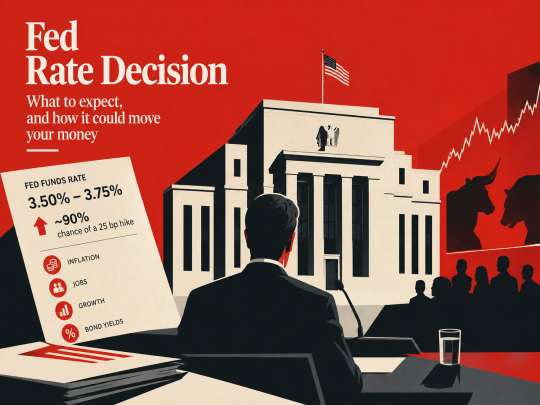
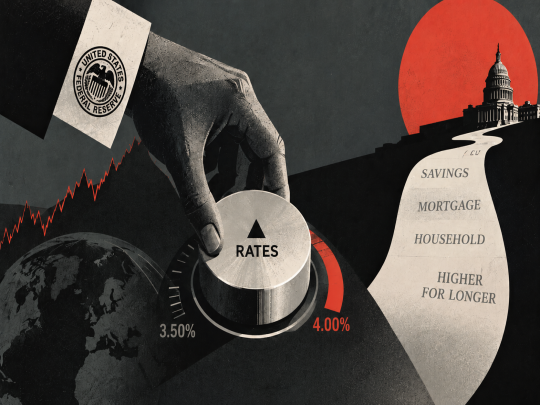
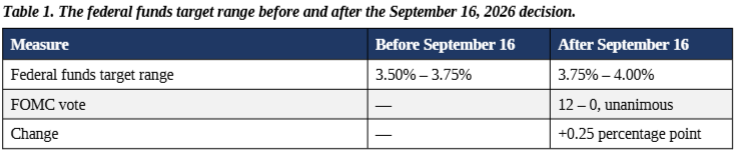
- The Federal Reserve raised its benchmark federal funds rate by a quarter point to a target range of 3.75 to 4 percent, its first increase in more than three years.
- The Federal Open Market Committee voted 12 to 0, with a brief statement citing elevated inflation as the reason for the move.
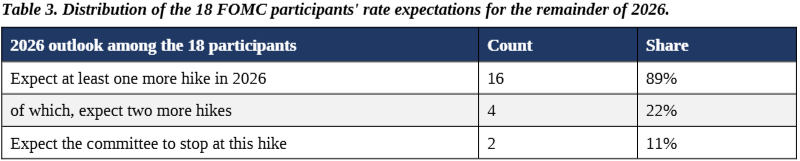
- Updated projections show most policymakers expect at least one more rate increase before the end of 2026, though no further hikes are penciled in for 2027 through 2029.
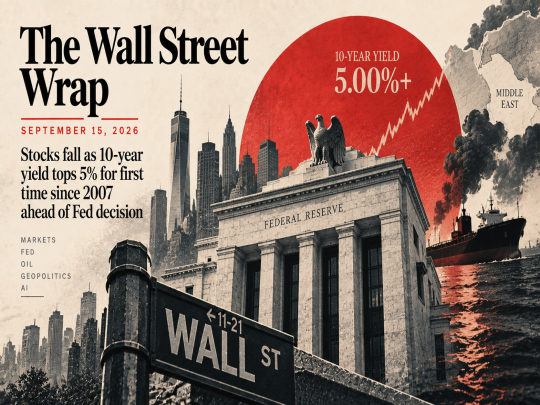
- Mortgage rates and Treasury yields had already climbed sharply before the meeting, with the 30-year fixed rate reaching 6.97 percent, its highest since May 2025, and the 10-year Treasury yield touching 5 percent.
- Mortgage applications fell 4.1 percent in the week before the decision, the steepest weekly drop since July, as borrowers responded to the higher rate environment even before the Fed acted.
- Savings account and CD rates, along with credit card and variable-rate debt costs, are likely to drift higher in the coming weeks as banks adjust to the new benchmark.
What the Federal Reserve Decided Today
On September 16, 2026, the Federal Open Market Committee raised its target range for the federal funds rate by a quarter percentage point, from 3.5 to 3.75 percent up to a new range of 3.75 to 4 percent. The vote was unanimous, 12 to 0. This marks the Fed's first rate increase in more than three years, reversing a stretch during which the committee had held rates steady.
The committee's statement was brief, noting that economic activity is expanding at a solid pace, that job gains have kept pace with the workforce, and that the unemployment rate has changed little. On inflation, the statement was direct: inflation remains elevated, and the committee said today's action will support a timelier return to its 2 percent goal.
Why the Fed Raised Rates Now
The decision followed a shift in tone that began in late August. For most of 2026 the committee had held rates steady, but a combination of persistently elevated inflation readings and rising energy prices, linked in part to conflict involving Iran and its effect on oil markets, along with the lingering effects of tariffs, pushed policymakers toward action. A stabilizing labor market gave the committee more room to focus on inflation without an immediate concern about employment. The Fed's updated projections lowered its expected unemployment rate for the year to 4.1 percent, down from its June projection.
Federal Reserve officials also pointed to a less obvious factor: the risk that persistently high energy costs could shift inflation expectations more broadly, along with the possibility that heavy investment tied to artificial intelligence could add inflationary pressure of its own. Policymakers were also candid that the memory of the last inflation cycle, when price increases were initially described as temporary before reaching a 40-year high, shaped their willingness to act sooner rather than wait.
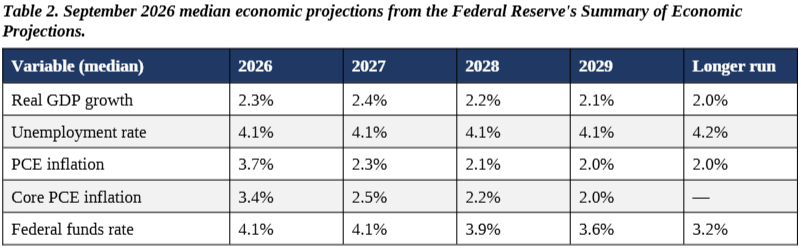
The updated projections were not entirely downbeat. Growth expectations actually firmed slightly alongside the higher inflation outlook. The Fed now sees real GDP expanding 2.3 percent in 2026, up from its June estimate of 2.2 percent, and 2.4 percent in 2027, up from 2.3 percent. That combination, modestly stronger growth alongside higher inflation, is consistent with the committee's reasoning that the economy could absorb tighter policy without a significant setback to activity.
The Fed's updated Summary of Economic Projections, released alongside the decision, shows the median policymaker now expects headline inflation, measured by the personal consumption expenditures price index, to reach 3.7 percent by the end of 2026 and core inflation to reach 3.4 percent, both slightly higher than the committee's June estimates. Officials do not expect inflation to return to the 2 percent target until 2029, though the projections show a sharp expected decline in 2027.
What Comes Next According to the Fed's Own Projections
The Fed's dot plot, which tracks each policymaker's individual expectation for where rates should stand, shows a large majority of participants anticipating at least one more rate increase before the end of 2026.
Beyond 2026, the picture becomes far less unified. For 2027, eight officials see another increase, six expect the rate to hold steady, and four expect cuts. No further increases are projected for 2028 or 2029, with the median projection showing modest rate cuts by the end of that period. One notable absence from the dot plot: Fed Chairman Kevin Warsh again declined to submit his own rate projection, a pattern he has maintained since taking the position.
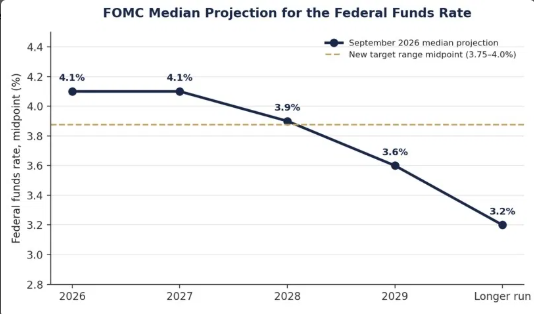
This divided outlook matters for anyone trying to plan around future borrowing or saving decisions. The Fed rarely raises rates only once when it judges inflation to be a genuine problem, which is consistent with the majority expecting at least one further increase this year. At the same time, the wide range of views for 2027 and beyond reflects real uncertainty about how quickly current inflationary pressures, particularly from energy prices, will fade.
What This Means for Savings Accounts and CDs
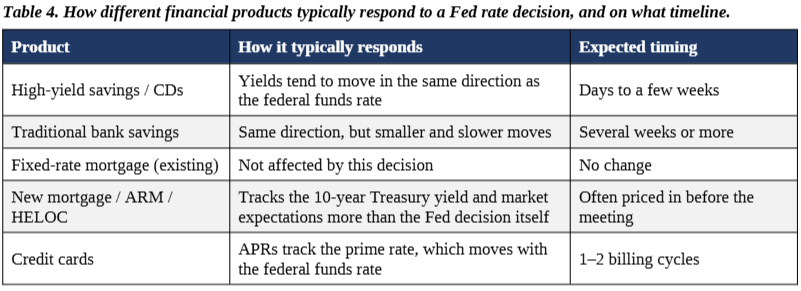
Savings account and certificate of deposit rates tend to move in the same direction as the federal funds rate, though the timing varies by institution. Online high-yield savings accounts and CDs, which compete aggressively for deposits, typically adjust within days to a couple of weeks of a Fed decision. Traditional brick-and-mortar bank savings rates tend to move more slowly and by smaller amounts.
For savers, a rate increase is generally favorable, since it tends to push deposit yields higher over time. Savers considering a CD may want to pay attention to how quickly rates move over the coming weeks, since locking in a rate too early in an environment where further increases are still likely could mean missing out on a higher rate shortly after.
What This Means for Mortgage Rates
Mortgage rates do not move in lockstep with the federal funds rate. They are influenced far more by the 10-year Treasury yield and by market expectations about the future path of monetary policy, which are often priced in before the Fed's meeting even takes place. In the weeks leading up to this decision, mortgage rates had already been climbing as markets increasingly anticipated a hike.
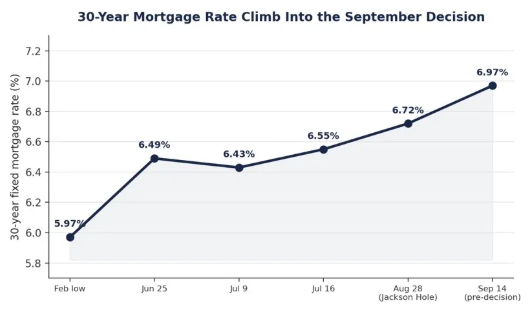
The average 30-year fixed mortgage rate reached 6.97 percent in the week ended September 11, its highest level since May 2025, according to the Mortgage Bankers Association. The increase tracked a sharp rise in Treasury yields, with the 10-year note touching 5 percent, approaching its highest level in 19 years, as renewed tension in the Middle East and stronger than expected inflation data reinforced expectations of the hike that ultimately arrived on September 16. Mortgage rates had climbed 88 basis points since the United States and Israel launched joint strikes against Iran on February 28, 2026, an escalation that has weighed on energy markets and inflation expectations ever since.
Because much of today's decision was anticipated, the immediate reaction in mortgage rates may be more modest than the run-up that preceded it. That said, with a majority of Fed officials projecting at least one additional hike later this year, upward pressure on mortgage rates is likely to persist. Existing fixed-rate mortgages are not affected by this decision. Homeowners with adjustable-rate mortgages or home equity lines of credit, which are tied more directly to short-term benchmark rates, are more likely to see a direct and faster impact.
The climb in mortgage rates has already begun showing up in borrower behavior. Total mortgage applications fell 4.1 percent in the week ended September 11, extending the prior week's 2.7 percent decline and marking the steepest weekly drop since July. Refinancing applications fell 8.8 percent, while purchase applications slipped 0.8 percent, according to Mortgage Bankers Association data. The pullback suggests many prospective buyers and refinancers were already pulling back before the Fed's decision was even announced, as the rate environment adjusted to the likelihood of a hike.
What This Means for Credit Cards and Variable-Rate Debt
Credit card annual percentage rates are closely tied to the prime rate, which moves in near lockstep with the federal funds rate. Cardholders carrying a balance can generally expect the higher rate to show up in their statement within one to two billing cycles. The same applies to other variable-rate debt, including many personal lines of credit and some private student loans. For anyone carrying revolving debt, a rate increase adds a modest but real cost, reinforcing the value of paying down variable-rate balances where possible.
Bottom Line for Households
Today's decision ends a period of steady rates and signals that the Fed sees inflation, driven substantially by energy prices and geopolitical factors, as enough of a concern to warrant tighter policy despite a still-solid job market. For savers, the move points toward somewhat higher yields on savings accounts and CDs in the weeks ahead. For borrowers, particularly those with adjustable-rate mortgages, home equity lines, or credit card balances, the cost of carrying debt is likely to edge higher. Fixed-rate mortgage holders are insulated from this specific decision, though anyone shopping for a new mortgage is stepping into a market where rates were already elevated before today and where the Fed's own projections suggest more tightening could follow later this year. With policymakers themselves divided on the path beyond 2026, households may be better served watching how inflation data evolves over the coming months rather than assuming today's move is the last.