Fed Decision Tomorrow: What the September Rate Hike Means for Stocks, Bonds, and Your Portfolio
America's central bank is about to do what it hasn't done in three years. The question for investors isn't whether the Fed hikes, it's what Kevin Warsh says next.

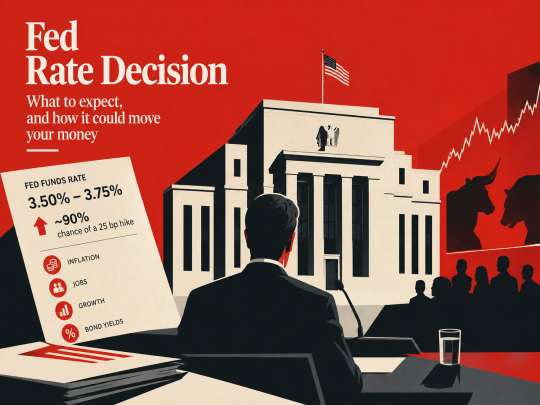
The Federal Reserve's rate decision is scheduled for tomorrow, September 16, at 2:00 p.m. ET, when the Federal Open Market Committee (FOMC) will announce its September 2026 interest rate decision, followed by a press conference from Fed Chair Kevin Warsh. This is shaping up to be one of the most consequential Fed meetings in years, and for retail investors trying to make sense of Fed rate hikes, inflation data, and what it all means for the stock market, this note breaks it down in plain English, backed by hard numbers.
For readers who want the full build-up to this moment, including how sticky inflation revived hike expectations over the past month, we covered that in detail in our Weekly US Macro Recap: Sticky Inflation Revives Fed Rate Hike Risk for September. This note picks up from there and looks ahead to the decision itself and its likely market impact.
The Headline: A Rate Hike Is Almost Certain
The federal funds target range currently sits at 3.50%–3.75%. Per the CME FedWatch tool (as of September 15, 2026), markets are pricing in roughly a 90–92.5% probability of a 25 basis point hike, which would lift the range to 3.75%–4.00%. A hold carries only about 7.5–10% odds.
If it happens, this would be:
- The first rate hike since July 2023
- The first hike under Chair Kevin Warsh
- A reversal of years of market expectations that the Fed's next move would be a cut, not a hike
The pivot accelerated after the August CPI print and Warsh's Jackson Hole remarks, where he stressed that price stability “is not self-executing.” In plain terms: the Fed is signalling it won't simply wait for inflation to fall on its own.
Why this matters for retail investors: the rate hike itself is largely priced in. What will actually move markets tomorrow is the tone of the statement and the updated dot plot, the Fed's projection of where rates go next.
The Data Behind the Decision
Inflation Is Still Sticky
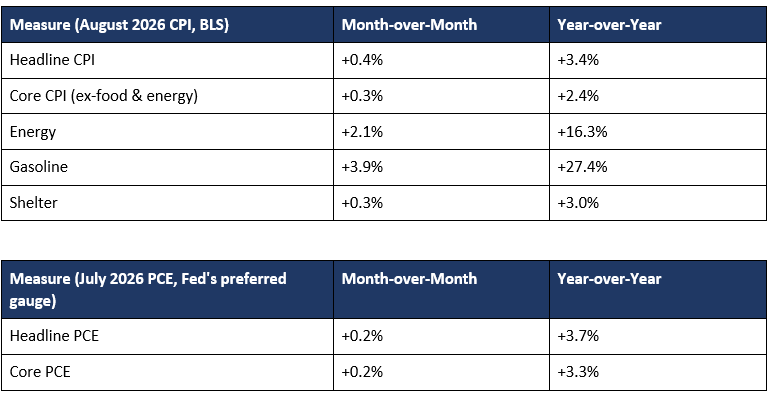
Both headline CPI (3.4%) and core PCE (3.3%) remain well above the Fed's 2% target. Energy price shocks, including gasoline up 27.4% year-over-year, have kept headline inflation elevated, while core inflation has only improved gradually and recently showed firmer monthly gains. This is precisely the kind of “sticky inflation” backdrop that pushes a central bank toward tightening rather than easing.
The Labor Market Remains Resilient
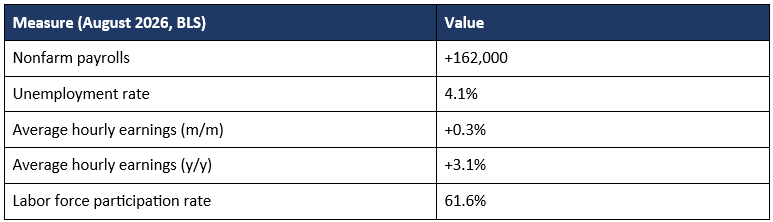
A 4.1% unemployment rate and solid payroll growth tell the Fed there's no urgent need to cut rates to protect jobs. A strong labor market gives the central bank room to prioritize inflation control.
Growth Has Slowed but Stayed Positive
Q2 2026 real GDP grew +1.5% annualized, down from +2.1% in Q1, per the BEA's second estimate. Consumer spending remains a key support, with final sales to private domestic purchasers up a healthy 4.2%. The economy is cooling, not cracking.
Bond Yields Are at Multi-Year Highs
As of September 15, 2026:
- 10-year Treasury yield: ~5.00–5.03%, a fresh 19-year high, driven partly by elevated oil prices
- 2-year yield: ~4.67%
- 30-year yield: ~5.37%
Yields have risen sharply from ~4.78% in early September as rate-hike odds firmed up. This matters directly for retail investors: when yields rise, existing bond prices fall, while newly issued bonds and CDs offer better income. It also raises the discount rate applied to future corporate earnings, a headwind for growth and tech valuations in particular.
S&P 500 Scenarios: How Stocks Could React Tomorrow
The S&P 500 closed near 7,580–7,590 on September 15, up roughly 14–15% over the past year, but under pressure from near-5% yields. Here's how different Fed outcomes could play out for equities:
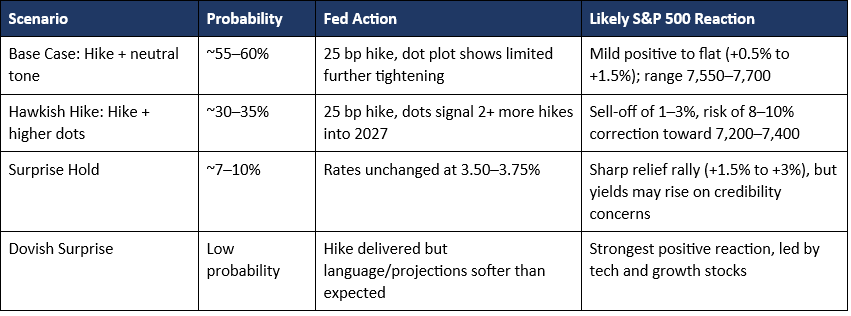
The key takeaway: the hike itself is old news. The real market-moving event is what the Fed signals about the path ahead, whether that's one more hike, several more, or a pause.
Stocks and Sectors Likely to Move Tomorrow
Banks and Financials typically benefit from higher rates through improved net interest margins.
- JPMorgan Chase (NYSE:JPM)
- Bank of America (NYSE:BAC)
- Financial Select Sector SPDR Fund (NYSEARCA:XLF)
Energy stocks remain supported by already-elevated oil prices, which a growth-resilient hike would reinforce further.
Long-duration tech and semiconductors are the most exposed to rising discount rates, since their valuations lean heavily on future cash flows.
- NVIDIA (NASDAQ:NVDA)
- Broadcom (NASDAQ:AVGO)
- Advanced Micro Devices (NASDAQ:AMD)
- Micron Technology (NASDAQ:MU)
Homebuilders and housing-related names face pressure as mortgage rates track Treasury yields higher.
- Lennar (NYSE:LEN), which notably reports earnings that same day after the close, creating a double catalyst
- R. Horton (NYSE:DHI)
- Wayfair (NYSE:W)
REITs and Utilities typically underperform on hawkish days, as higher yields make their dividend yields comparatively less attractive and raise financing costs.
What This Means for Your Portfolio
For retail investors trying to navigate the 2026 interest rate outlook, a few practical points stand out:
- Cash and short-term instruments look more attractive. Higher short-term rates improve returns on money-market funds, T-bills, and short-term CDs.
- Bond price risk cuts both ways. Existing bond prices fall when yields rise, but new purchases now lock in higher income. Shorter durations reduce sensitivity if you're concerned about further rate risk.
- Expect sector rotation, not a uniform move. Financials and energy may hold up better than pure growth and tech names if the Fed delivers a “clean” hike without an aggressively hawkish tone.
- Volatility will likely spike between 2:00–3:30 p.m. ET. The first 15–30 minutes of market reaction can be noisy and prone to reversal, so avoid overreacting to the initial knee-jerk move.
- Fundamentals still matter more than any single announcement. Position sizing and diversification will serve long-term investors better than trying to time the exact reaction to tomorrow's Fed decision.
Bottom Line
The data paints a picture of an economy that is still growing, with a resilient labor market, but inflation that remains uncomfortably above target. That combination, 4.1% unemployment alongside 3.4% headline CPI and 3.3% core PCE, is exactly the setup that supports a measured, data-driven rate hike rather than a pause.
The rate hike itself is largely priced into markets already. What will really drive the S&P 500's reaction tomorrow, and the broader direction of the US stock market, is the tone of Chair Warsh's statement and the new dot plot signalling how many more hikes could follow into 2027.
We'll be tracking tomorrow's 2:00 p.m. ET announcement and Chair Warsh's press conference live, with a follow-up note on the market reaction shortly after.
This article is for educational and informational purposes only and does not constitute personalized investment advice. Please consider your own risk tolerance, financial situation, and time horizon, and consult a licensed financial advisor before making investment decisions